Behavioural Based Safety (BBS) Programme in South Africa: From Root to Fruit Safety Culture

Behavioural Based Safety (BBS) Programme in South Africa
Workplace incidents rarely happen because policies are missing.
They happen because behaviour does not align with risk.
A Behavioural Based Safety (BBS) Programme is not just about observing unsafe acts. It is about understanding the root thinking that produces behaviour and building a system that transforms safety from compliance to culture.
At SafetyWallet, behavioural safety goes beyond observation. It integrates:
- Risk Assessments
- Compliance Registers
- Leadership Accountability
- And the MES Root-to-Fruit Mindset Safety Programme
This is how organisations move from reactive safety to predictive safety.
In this video, we explain how behaviour is not random. It is the visible result — the “fruit” of deeper beliefs and thinking patterns.
To improve safety behaviour, we must go deeper than observation.
We must work at the root.
What Is a Behavioural Based Safety Programme?
A Behavioural Based Safety Programme (BBS) is a structured approach that:
- Identifies critical safety behaviours
- Observes workplace actions
- Provides feedback
- Reinforces safe habits
- Reduces unsafe acts
Traditional BBS focuses on observation and feedback.
However, sustainable behavioural safety requires more than correcting actions. It requires influencing the mindset that drives those actions.
The Problem with Traditional Behavioural Safety Systems
Many organisations implement BBS by:
- Observing unsafe behaviour
- Recording findings
- Issuing warnings
- Providing training
But behaviour does not originate at the surface.
It originates in:
- Beliefs
- Attitudes
- Perceptions of risk
- Leadership modelling
Without addressing the root thinking, unsafe behaviours simply reappear under pressure.
The Root-to-Fruit Safety Model (MES Framework)
SafetyWallet integrates behavioural safety with the MES (Mindset Evolution Schema): Root-to-Fruit Mindset Safety Programme.
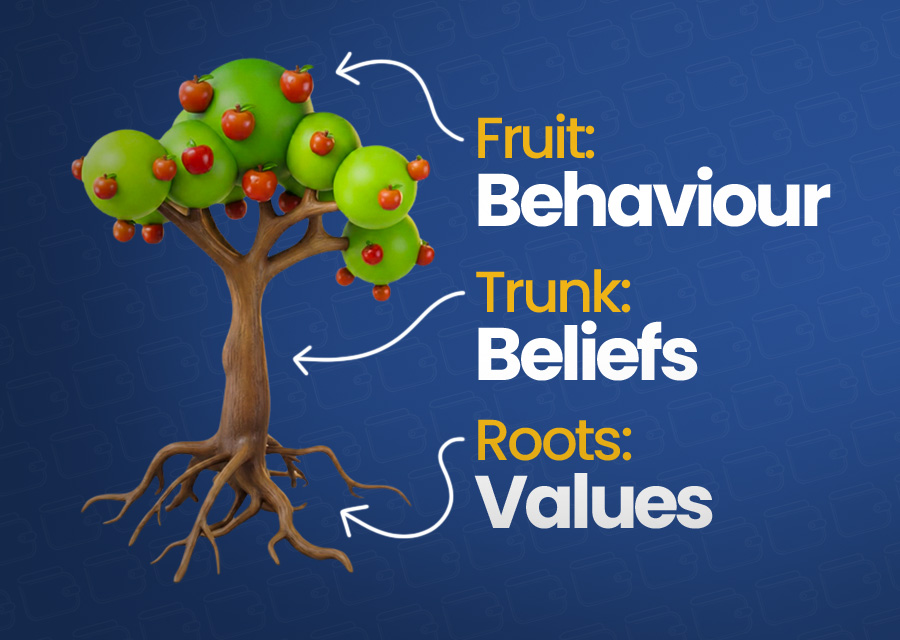
In this model:
- Roots = Values
- Trunk = Beliefs
- Fruit = Behaviour
Unsafe behaviour is not the root problem.
It is the visible fruit of internal belief systems.
If employees believe:
- “Production matters more than safety”
- “This shortcut saves time”
- “Nothing will happen”
Then unsafe behaviour becomes predictable.
The MES approach transforms safety by reshaping beliefs that influence daily choices.
Integrating Behavioural Safety with Risk Assessments
A powerful Behavioural Based Safety Programme must be linked to:
- Task-Based Risk Assessments
- Safe Operating Procedures
- Control Measures
- Legal Compliance Registers
Risk assessments identify hazards.
Behavioural safety ensures those controls are actually applied.
This integration allows organisations to move from:
“We have compliance documents.”
To:
“We manage risk daily through behaviour.”
The 5 Strategic Pillars of a Modern Behavioural Based Safety Programme
1. Identify Critical Risk Behaviours
- ➢ Start with high-risk tasks
- ➢ Which behaviours increase exposure?
- ➢ Which behaviours reduce exposure?
- ➢ Behaviour must be mapped directly to risk severity.
2. Measure Behaviour Objectively
Use structured observation processes.
- Safe vs unsafe ratios
- Near-miss patterns
- Behaviour trends by department
Data transforms behavioural safety into a measurable performance indicator.
3. Immediate Feedback and Positive Reinforcement
- ➢ Recognition builds culture faster than punishment.
- ➢ Employees who are acknowledged for safe choices reinforce safety identity.
- ➢ This links directly to the MES model - identity shapes behaviour.
4. Leadership Modelling
- ➢ Leadership behaviour sets the tone.
- ➢ If leadership bypasses safety controls, employees follow.
- ➢ If leadership visibly prioritises risk management, safe behaviour normalises.
- ➢ Behaviour flows downward from influence.
5. Continuous Cultural Measurement-
Behaviour must be evaluated alongside:
- Compliance performance
- Incident trends
- Training effectiveness
- Mindset alignment
Predictive safety comes from understanding behaviour before incidents occur.
Behavioural Safety in South Africa
Under the Occupational Health and Safety Act in South Africa, employers are legally responsible for providing a safe working environment.
However, legislation cannot enforce daily behaviour.
Only culture can.
A Behavioural Based Safety Programme ensures that:
- Compliance is lived, not filed
- Risk assessments become action
- Employees take ownership
South African businesses that integrate behavioural safety into their management systems see measurable reductions in incident frequency and compliance risk exposure.
The Business Case for Behavioural Safety
A structured Behavioural Based Safety Programme delivers:
- ➢ Reduced workplace injuries
- ➢ Improved audit outcomes
- ➢ Lower insurance risk exposure
- ➢ Higher employee engagement
- ➢ Stronger leadership credibility
- ➢ Predictable risk reduction
Behavioural safety is not a cost.
It is a risk investment strategy.
Why SafetyWallet’s Approach Is Different
Unlike traditional BBS systems that focus only on behaviour observation, SafetyWallet integrates:
- Behavioural safety
- Task-Based Risk Assessment systems
- Compliance management tools
- Digital registers
- Triple P Programme Training
- MES Root-to-Fruit programme
- Leadership accountability
This creates a complete ecosystem where behaviour, risk, and compliance work together.
Safety stops being reactive.
It becomes strategic.
Conclusion: From Observation to Transformation
Behavioral Based Safety is not about monitoring people.
It is about influencing thinking.
When organisations align:
Values → Beliefs → Attitude → Behaviour
They move beyond compliance into culture transformation.
If your organisation wants a Behavioural Based Safety Programme in South Africa that integrates risk assessments, compliance, and mindset transformation, SafetyWallet provides the structured system to achieve it.