
The Common Misconception: Is SafetyWallet Just Another OHS Dashboard?
One of the most common misconceptions about SafetyWallet is that it is only a cloud-based Health and Safety dashboard.
A new visitor may see OHS Online, digital registers, online training, inspection tracking, action lists and dashboards, and assume that SafetyWallet simply gives the client software and then expects the client to do everything alone.
That is not the full picture.
SafetyWallet is a Health and Safety SaaS platform, but Health and Safety cannot be managed only from behind a computer screen. Workplace safety happens where people work: in kitchens, warehouses, workshops, schools, factories, retail stores, construction areas, offices, loading bays, storerooms and plant rooms.
A digital platform can show what must be done. It can remind the responsible person that an inspection is due. It can store a risk assessment. It can track corrective actions. It can show the status of registers. It can keep evidence organised.
But someone still needs to walk the workplace, inspect the fire extinguisher, check the first aid box, verify the evacuation route, review the safety file, observe the task, train the appointee, and confirm that control measures are actually working.
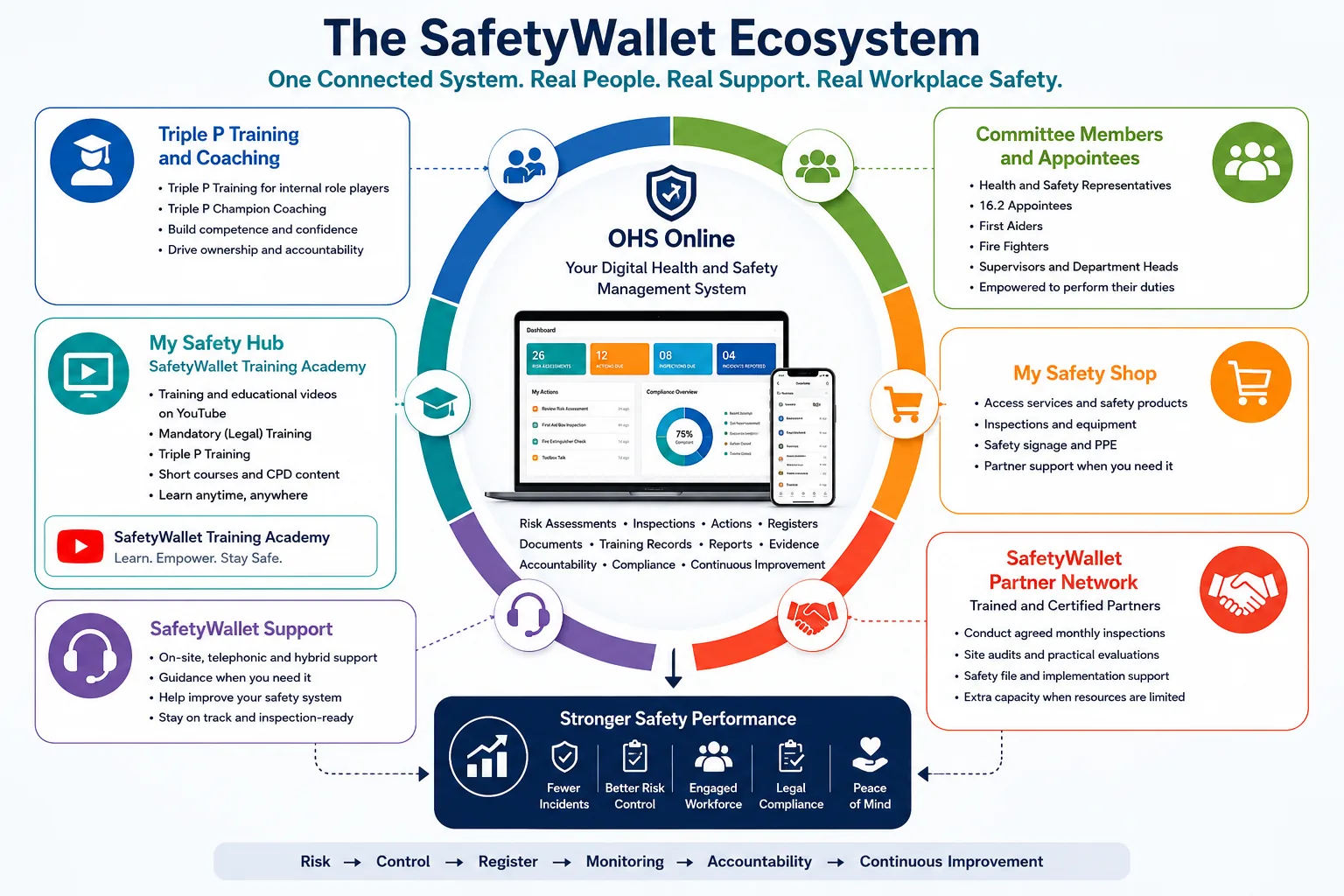
That is where the full ecosystem becomes important. SafetyWallet connects OHS Online, Triple P Training, My Safety Hub, My Safety Shop, structured support and partner delivery into one practical Health and Safety ecosystem.
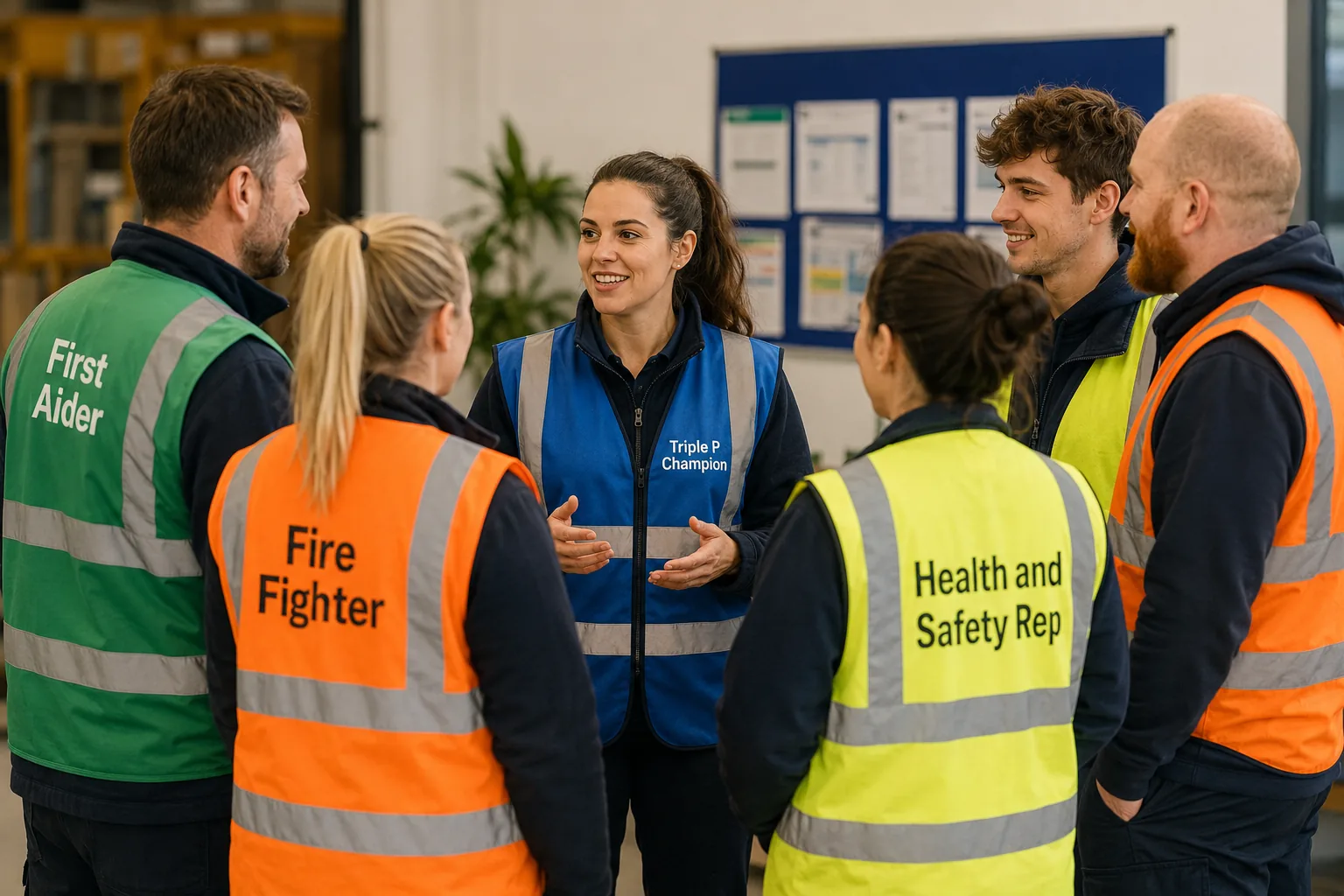
If your business needs more than a digital OHS dashboard, explore Health and Safety Consulting Services in South Africa. SafetyWallet helps you combine OHS Online, Triple P Training, internal role-player empowerment and practical workplace support into one connected Health and Safety programme.
What We See When Businesses Treat Health and Safety Software as a Dashboard Only
At SafetyWallet, one of the most common mistakes we see is that businesses buy or subscribe to Health and Safety software but do not train the internal people who must drive the system.
The result is predictable. This is why SafetyWallet does not position OHS Online as a standalone dashboard. A dashboard can create visibility, but people still need competence, responsibility and follow-through.
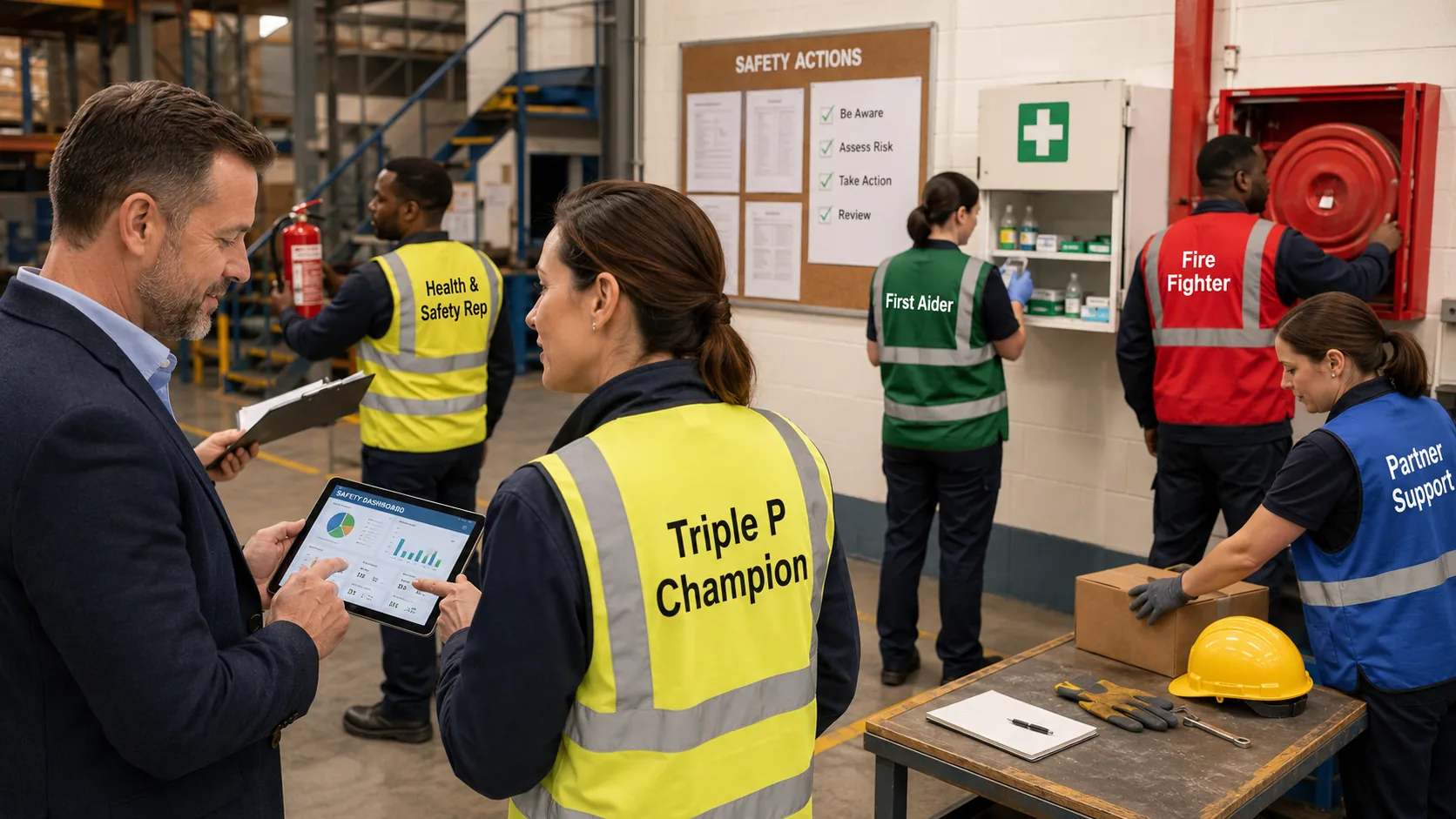
The system only becomes powerful when the organisation trains the internal role players who must manage the programme every day. That is where the Triple P Champion, Health and Safety committee members, 16.2 appointees, Health and Safety Representatives, First Aid Officers, Fire Fighters, supervisors and department heads become essential.
- The dashboard exists, but nobody owns the actions.
- Registers are available, but inspections are not completed.
- Risk assessments are uploaded, but control measures do not become daily routines.
- Appointees are appointed, but they are not confident in what they must do.
- Management can see overdue items, but the business has not built the internal discipline to act on them.
Why Health and Safety Cannot Be Managed Only Behind a Screen
Health and Safety management starts with information, but it does not end with information.
In South Africa, the Occupational Health and Safety Act places a duty on employers to provide and maintain, as far as reasonably practicable, a working environment that is safe and without risk to employees. That duty is practical. It expects safe systems of work, suitable precautionary measures, information, instruction, training and supervision.
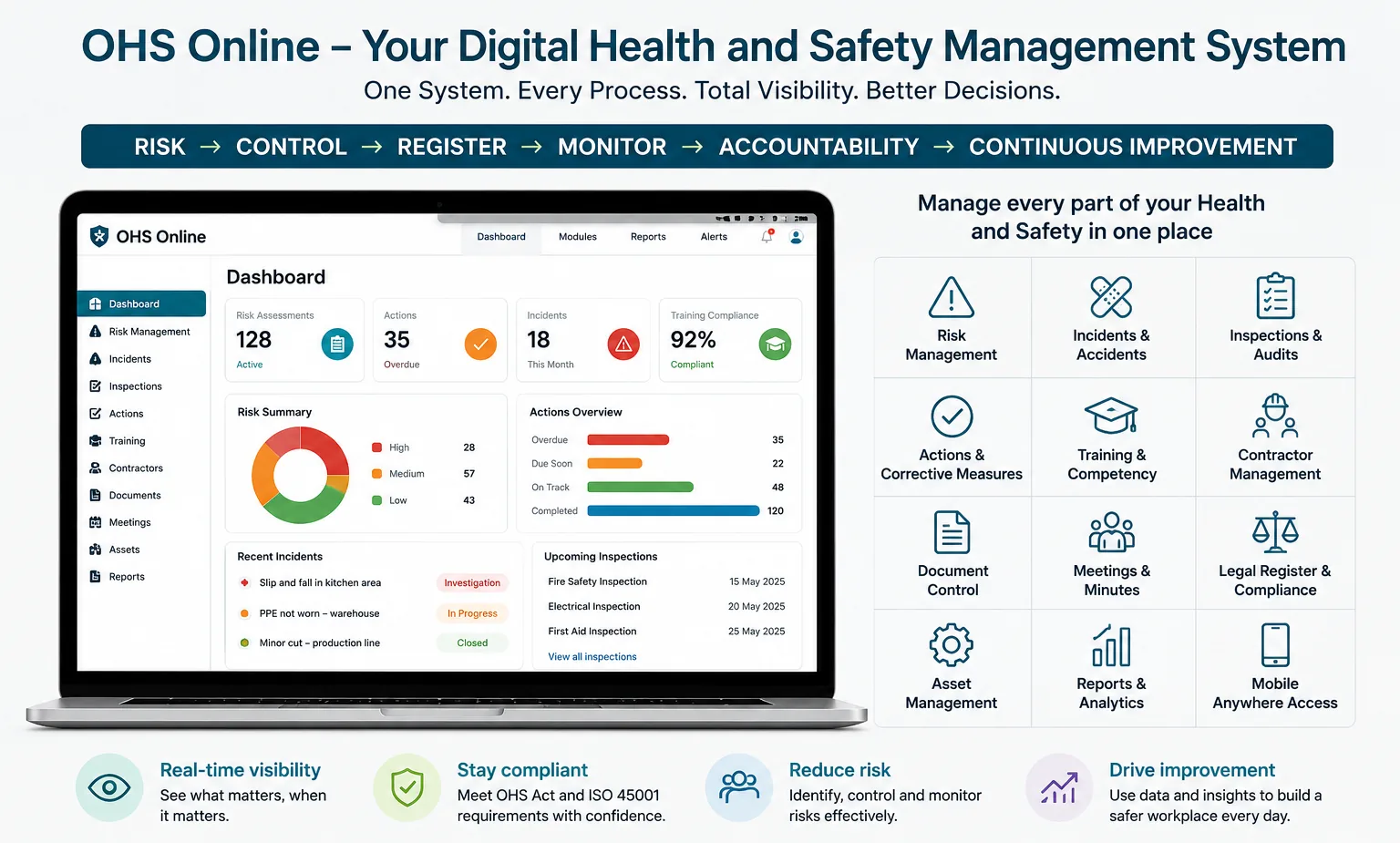
This means a Health and Safety Management System must move through a practical cycle: Risk → Control → Register → Monitoring → Accountability → Continuous Improvement.
OHS Online helps manage this cycle digitally. But the system must still be activated in the workplace. This is why the strongest Health and Safety model is a hybrid model where the organisation owns its responsibilities, while SafetyWallet provides the system, training, support and partner access.
A first aid box inspection is not complete because a register exists. A task-based risk assessment for cleaning a deep fryer only becomes practical when control measures are visible at the task. A contractor induction is not only a record — it must confirm understanding before work starts.
The Power of the SafetyWallet Ecosystem
SafetyWallet works best when it is understood as an ecosystem. At the centre is OHS Online, the digital Health and Safety Management System. Around OHS Online are the support structures that make the system practical: Triple P Training, Triple P Champion coaching, Health and Safety committee empowerment, eLearning, My Safety Hub, My Safety Shop, SafetyWallet support, MAKROSAFE and other trained partners.
This matters because many businesses do not have a full-time internal safety officer. SafetyWallet helps by giving them a system. Triple P Training helps by building internal competence. Partner support helps when the organisation does not have enough time, capacity or expertise to complete workplace activities on its own.
Training the Triple P Champion to Manage the Health and Safety Programme
One of the most important parts of the SafetyWallet model is the training and empowerment of a Triple P Champion. The Triple P Champion is not simply a person who attends a course. The Triple P Champion becomes the internal driver of the Health and Safety Programme — helping connect the organisation's policies, procedures, practices, risk assessments, control measures, registers, inspections, appointees, training records and action tracking into one practical management system.
This is where SafetyWallet becomes different from ordinary OHS software. The purpose of the Triple P Champion is to help the organisation move from dependence to ownership.
- Software can hold information.
- A Triple P Champion helps activate the system.
- Committee members help carry the responsibilities.
- Appointees complete the required checks.
- Managers and supervisors create accountability.
- Partner support helps when the workload becomes too much.
The Triple P Champion Gap: Why Software Needs an Internal Driver
The biggest gap in many Health and Safety programmes is not the lack of a document. It is the lack of an internal person who understands how the system must be driven.
Without this internal driver, Health and Safety easily becomes reactive. The business waits for an audit, waits for an inspection, waits for an incident, or waits for a consultant to point out what should already have been managed.
With a trained Triple P Champion, the programme becomes more active. The purpose is not to create dependency on SafetyWallet or any external partner. The purpose is to help the organisation build internal ownership.
Training Committee Members and Appointees to Become Competent in the System
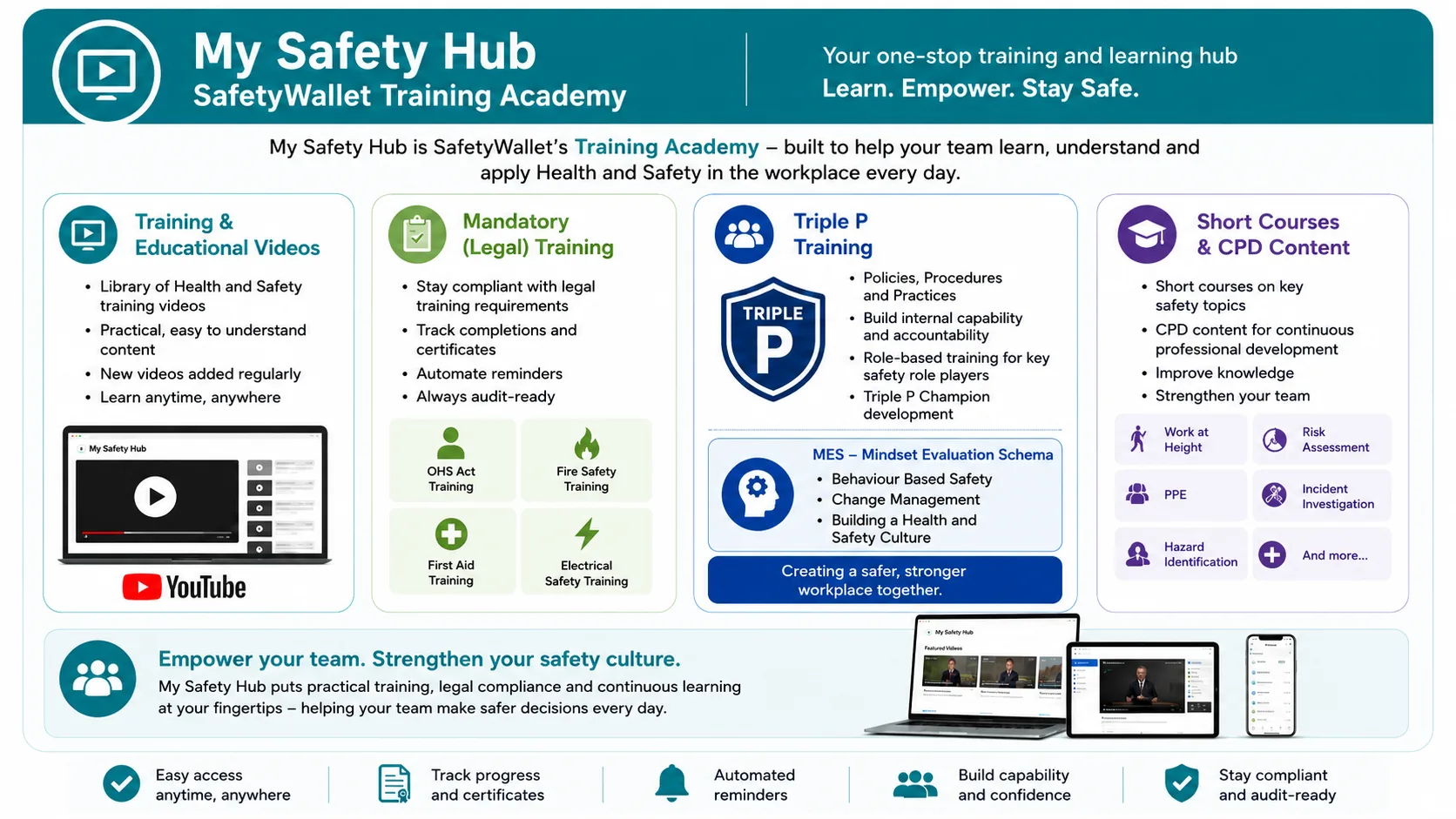
Depending on the subscription package and support structure, Triple P Training and SafetyWallet system guidance can also support key role players including Health and Safety Representatives, 16.2 appointees, First Aid Officers, Fire Fighters, supervisors, department heads, committee members and other appointed responsible persons.
The goal is to help these role players understand the SafetyWallet Triple P system and become competent in using OHS Online for their Health and Safety responsibilities. This creates a stronger internal Health and Safety culture because the programme is no longer dependent on one person.
Software vs Training vs Boots on the Ground
SafetyWallet's value becomes clearer when the model is broken down into three layers:
| Layer | What It Does | Practical Example |
|---|---|---|
| OHS Online Digital Portal | Tracks risk assessments, registers, inspections, documents, training and actions. | The system shows that monthly fire extinguisher inspections are due. |
| Triple P Training and Committee Empowerment | Builds internal competence so role players know how to manage the programme. | The Triple P Champion guides the Fire Fighter appointee to complete the inspection correctly. |
| Partner Network and Practical Support | Provides workplace execution support when internal resources are limited. | MAKROSAFE or another SafetyWallet partner conducts the agreed monthly inspection and updates the evidence. |
Software Only vs Consultant Only vs the SafetyWallet Hybrid Model
| Model | What Usually Happens | Main Risk | SafetyWallet's Position |
|---|---|---|---|
| Software only | The business receives a dashboard, registers and digital tools. | The system becomes passive if nobody is trained to drive it. | OHS Online must be supported by Triple P Training, appointee empowerment and management accountability. |
| Consultant only | The consultant prepares files, inspections and reports. | The business may become dependent and lose daily ownership. | Partner support should help execute, but the organisation must still understand and own the programme. |
| SafetyWallet hybrid model | The business gets OHS Online, Triple P Training, committee/appointee empowerment and partner support when needed. | Requires commitment from internal role players. | This creates visibility, competence, support, accountability and continuous improvement. |
When Resources and Work Pressure Become a Problem
In a perfect world, every organisation would have enough internal time, knowledge and capacity to manage every Health and Safety activity properly. In reality, many businesses are under pressure. Managers are busy. Supervisors are stretched. Health and Safety Representatives may be appointed but not confident.
This is where SafetyWallet's partner support becomes important. When internal resources are limited, a SafetyWallet partner such as MAKROSAFE can support the organisation by conducting agreed monthly inspections, practical workplace checks, safety file support, site audits or other workplace Health and Safety activities.
The wording matters: the partner can take responsibility for conducting the agreed activity, but the organisation still remains responsible for its Health and Safety programme.
Why Outsourcing Everything Also Creates a Risk
There is also an opposite mistake. Some businesses try to outsource everything. A consultant prepares the file, does the inspection, updates the paperwork and tells the business what is missing. This may help the company get through an audit or inspection, but it does not always build daily ownership inside the organisation.
The risk is that the business has documents, but not understanding. It has a file, but not a living system. It has a consultant's report, but not internal accountability.
That is why SafetyWallet's model is different from a pure consulting model. The stronger message is: You manage your Health and Safety. We give you the system, training, support and partner network to help you do it properly.
How the Hybrid Model Works in Practice
Imagine a retail store using SafetyWallet. OHS Online shows that first aid box inspection, fire extinguisher inspection, emergency exit route check, cleaning chemical storage inspection, contractor induction review, toolbox talk completion and task-based risk assessment review are due.
The digital system can show the status of each activity. But the system does not physically walk to the emergency exit. It does not open the chemical cupboard. It does not inspect the first aid box. That work must happen in the workplace. There are three practical ways to manage it:
- The internal appointee completes the inspection because they are trained and competent.
- The Triple P Champion guides the appointee and ensures the inspection is done correctly on OHS Online.
- Where the business does not have time or capacity, a SafetyWallet partner such as MAKROSAFE conducts the agreed monthly inspection and ensures the findings are captured and followed up.
That is the bridge between the dashboard and the shop floor.
Practical Example: A Busy Restaurant Using the SafetyWallet Hybrid Model
Consider a busy restaurant where the owner and managers are under pressure every day. Before using a structured Health and Safety system, the restaurant may have several common gaps:
- First aid box inspections are missed.
- Fire extinguisher checks are not recorded.
- Cleaning chemicals are stored without regular review.
- The task of cleaning the deep fryer has not been properly linked to controls and safe work practices.
- Contractor induction is inconsistent.
- Nobody is sure who must follow up on overdue actions.
OHS Online helps make these requirements visible. The Triple P Champion helps drive the internal programme. Where the restaurant does not have enough time or internal capacity, a SafetyWallet partner such as MAKROSAFE can support the business by conducting agreed monthly inspections and practical workplace checks.
The result is not that the restaurant hands Health and Safety away. The result is that the restaurant gains a practical system, trained role players, better visibility, and access to support when the internal team is under pressure. That is the SafetyWallet hybrid model in action.
Why This Creates Peace of Mind for Busy Business Owners
Real peace of mind means the business owner can see what is required, who is responsible, what has been done, what is overdue, where the evidence is stored, and where expert support is available. SafetyWallet creates this through a practical structure:
- OHS Online shows the work.
- Triple P Training builds internal understanding.
- The Triple P Champion drives the programme.
- Committee members and appointees carry responsibilities.
- Partner support helps when time and resources are limited.
- Registers create continuity.
- Dashboards create visibility.
- Actions create accountability.
The SafetyWallet Operating Logic: From Risk to Ownership
Where behaviour and culture are involved: Risk → Control → Register → Observation → Trait → Value → Identity → Ownership
This is not just a slogan. It is how Health and Safety becomes manageable. Where behaviour, culture and change management are involved, this logic extends to connect to Behaviour-Based Safety. This is where MES, the Mindset Evaluation Schema, becomes important. MES helps SafetyWallet connect Behaviour Based Safety, change management and Health and Safety culture to the daily actions people take in the workplace.
Why Risk Assessment Still Comes First
Before a business books services, requests inspections or appoints a partner, it must understand its risks. A task-based Health and Safety Risk Assessment identifies what can go wrong during actual work. Once the risk is understood, control measures can be selected, registers activated and monitoring can begin.
How SafetyWallet Supports a Health and Safety Management System
OHS Online should not be seen as a place where documents are stored and forgotten. It should be seen as the working structure of the organisation's Health and Safety Management System. A management system must help the business answer practical questions: What are our risks? What controls are required? Which registers must be active? Who is responsible? What must improve next?
How SafetyWallet Supports ISO 45001 Maturity
For organisations working toward ISO 45001 support in South Africa or trying to mature an existing occupational Health and Safety system, SafetyWallet helps the organisation build that working system through OHS Online, Triple P Training, appointee empowerment and practical support.
How My Safety Shop Fits Into the System
My Safety Shop is important because it gives the business a practical pathway when a gap is identified. A risk assessment may show that the business needs PPE. A register may show that fire extinguishers need inspection. An audit may show that emergency lighting must be checked.
OHS Online helps identify and track the gap. My Safety Shop gives access to the product or service. A SafetyWallet partner can support the workplace activity. The evidence can be uploaded and monitored. This is the difference between a static Health and Safety file and a living management system.
The Correct Role of MAKROSAFE and SafetyWallet Partners
A SafetyWallet partner such as MAKROSAFE plays a valuable role when the client needs practical Health and Safety support. This may include conducting agreed monthly inspections, supporting safety file readiness, conducting site audits, assisting with risk assessment implementation, verifying workplace control measures and providing hands-on workplace guidance.
The partner does not replace the organisation's legal accountability. The partner supports the organisation's ability to execute.
The Balanced SafetyWallet Model: Ownership With Support
SafetyWallet gives the business the system, trains the internal role players, guides the Triple P Champion, supports committee members and appointees, and connects the organisation to partner support when workplace execution needs extra capacity.
This is the balanced model. It is not software only. It is not consultant dependency. It is ownership with support.
Need more than OHS software?
Explore SafetyWallet's Health and Safety Consulting Services in South Africa to see how OHS Online, Triple P Training, committee empowerment, My Safety Shop and partner support help your organisation turn Health and Safety responsibilities into practical workplace action.
Explore Consulting Services →Conclusion: The Platform Shows the Work, the Training Builds Ownership, and the Partner Network Supports Execution
SafetyWallet is more than just software.
OHS Online gives the organisation a digital system to manage risk assessments, registers, inspections, training, documents, actions and accountability. Triple P Training builds the internal competence needed to manage that system properly. The Triple P Champion helps drive the Health and Safety Programme inside the organisation.
Committee members and appointees — including Health and Safety Representatives, 16.2 appointees, First Aid Officers, Fire Fighters, supervisors and department heads — are empowered to understand their roles and complete their responsibilities. When work pressure, lack of time or limited internal resources become a problem, a SafetyWallet partner such as MAKROSAFE can support the organisation by conducting agreed monthly inspections and practical workplace activities.
The business remains responsible. The platform creates visibility. The training builds competence. The partner network supports execution. The registers keep the programme alive. The dashboard creates accountability. The improvement cycle keeps Health and Safety moving forward.
That is how SafetyWallet helps South African businesses manage Health and Safety Compliance in South Africa in a practical, sustainable and accountable way.
Visit the SafetyWallet Health and Safety SaaS platform or the Health and Safety Consulting Services in South Africa page to see how SafetyWallet connects OHS Online, Triple P Training, committee empowerment and partner support into one practical Health and Safety ecosystem.